
Lighting is often the last item on the home decor checklist—but it should be one of the first. Light is far more than just a means to an end—a way to see in the dark. It’s one of the most powerful design elements you can use to influence a room’s architecture and mood.
A well-chosen light fixture is a sculpture by day and a mood-setter by night. Learn here how to use light strategically to give your home depth, structure, and a special atmosphere.
Light shapes the space. Imagine a room lit only by a bright ceiling fixture. The result often feels flat and uninviting because there are no shadows to give the room definition.
True comfort comes from contrasts. By combining different light sources at various levels, you create what are known as “islands of light.”
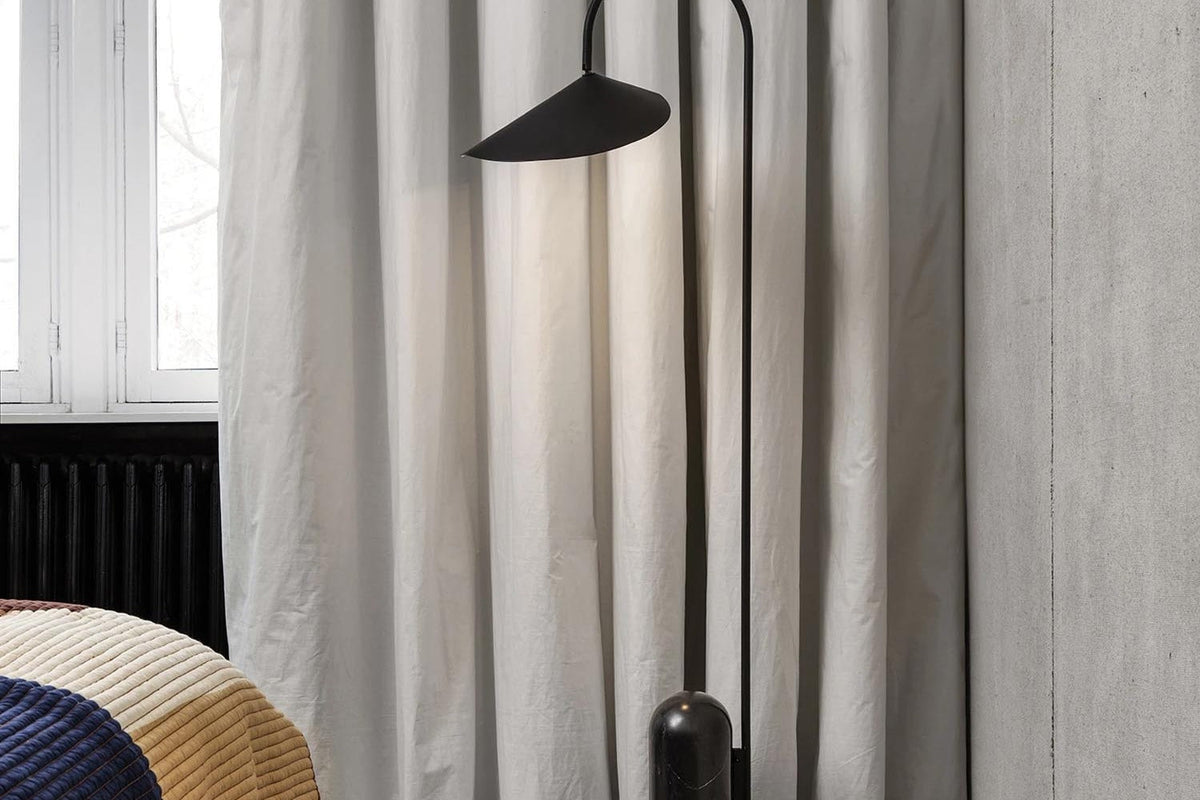
A living room floor lamp next to the armchair creates a cozy reading nook, while a dining room pendant lamp makes the dining table the center of attention. A bedroom ceiling light creates a calm and harmonious atmosphere—perfect for sleeping.

The light as a sculpture: Design in daylight
A key aspect of modern living is the aesthetics of the object itself. A high-quality light fixture must be visually appealing even when turned off.
Whether delicate metal structures, hand-blown glass, or organic shapes— light fixtures serve as eye-catchers and emphasize the room’s style.
A striking table lamp on a sideboard acts like a work of art and lends the piece a new sense of value.
Lighting Layers: The Secret to a Cozy Atmosphere
Professionals design lighting in three layers to provide visual orientation and a sense of calm in a space:
- General lighting: Provides orientation; ideally, it should be soft and indirect.
- Accent lighting: Creates targeted highlights, such as for pictures, walls, or objects.
- Mood lighting: Small light sources with warm light that convey a sense of coziness.
Material and Reflection
: Not only the light source but also the material of the fixture influences the effect of the light. Fabric shades diffuse the light softly, while metal directs it precisely and creates clear accents.
In combination with sideboards or shelves, exciting plays of light emerge when surfaces reflect the light and provide indirect illumination.
Conclusion: Light is quality of life
. Lighting is the invisible design element that has the greatest influence on how we feel. It determines whether we feel alert and focused or relaxed and secure.
Don’t view lighting fixtures as a technical necessity, but rather as tools for well-being and for expressing your personal style. Because in the end, it’s the light that transforms a house into a real home.
Imagine a room lit only by a bright ceiling fixture. The result often feels flat and uninviting because there are no shadows to give the room definition.
True comfort comes from contrasts. By combining different light sources at various levels, you create what are known as “islands of light.”
A living room floor lamp next to the armchair creates a cozy reading nook, while a dining room pendant lamp makes the dining table the center of attention. A bedroom ceiling light creates a calm and harmonious atmosphere—perfect for sleeping.
The light as a sculpture: Design in daylight
A key aspect of modern living is the aesthetics of the object itself. A high-quality light fixture must be visually appealing even when turned off.
Whether delicate metal structures, hand-blown glass, or organic shapes— light fixtures serve as eye-catchers and emphasize the room’s style.
A striking table lamp on a sideboard acts like a work of art and lends the piece a new sense of value.
Lighting Layers: The Secret to a Cozy Atmosphere
Professionals design lighting in three layers to provide visual orientation and a sense of calm in a space:
- General lighting: Provides orientation; ideally, it should be soft and indirect.
- Accent lighting: Creates targeted highlights, such as for pictures, walls, or objects.
- Mood lighting: Small light sources with warm light that convey a sense of coziness.
Material and Reflection
: Not only the light source but also the material of the fixture influences the effect of the light. Fabric shades diffuse the light softly, while metal directs it precisely and creates clear accents.
In combination with sideboards or shelves, exciting plays of light emerge when surfaces reflect the light and provide indirect illumination.
Conclusion: Light is quality of life
. Lighting is the invisible design element that has the greatest influence on how we feel. It determines whether we feel alert and focused or relaxed and secure.
Don’t view lighting fixtures as a technical necessity, but rather as tools for well-being and for expressing your personal style. Because in the end, it’s the light that transforms a house into a real home.